Saturday, 13 February 2016

Taking the Victory Liner Bus to Baguio City


Taking the Victory Liner Bus to Baguio City

         Leaving my old, reliable Toyota Altis behind, I took a Baguio-bound Victory Liner aircon bus at its Metro Manila terminal. With the bus travelling at an average speed of 90 kms. per hour, we breezed past the provinces of Tarlac, Pangasinan and Rosario, La Union. By 3pm, we were ascending the gentle bends of Marcos Highway and I had a glimpse of the woodcarving shops that have been there for decades. It was foggy and vehicles had their headlights on.

        A little past 4pm, I caught sight of the steeples of Baguio Cathedral as the Victory Liner bus slowly approached the terminal. There was a drizzle and being the passenger closest to the door, I was the first to disembark. Though it was my nth time to visit the City of Pines in recent years, I still had that nostalgic feeling. Of years gone by, of special people I had missed. As I was adjusting the straps of my backpack, two boys walked by and were talking in the native tongue. For sure I was in a distant place, a place I once called "my home".

        It was dusk when I hooked up with my old buddy Peter at Lower Session Road. The lights of the city were starting to glitter. We had chicken with gravy, mashed potatoes and macaroni salad. Through the clear glass panels, I could see commuters falling in line for their ride home. Traffic was heavy. There was heavy concentration of people and vehicles. Clearly the city is overpopulated. Session Road is no longer the Session Road I used to know.

         At my behest, we started walking the inner streets of the city. We stopped at one bar and grill restaurant where two entertainers were singing alternately old country music, reminiscent of our Abanao days in the 80s. The owner was complaining that business was not as good as it used to be. Next we proceeded to that narrow street where our gang would wind up our day with shots of hard liquor. But sadly we could not find that hole-in-the-wall hangout anymore. In its place were stalls of wagwagan. Indeed, times and places have changed.

        It was 4 a.m., two days later, when I boarded the Victory Liner bus bound for Manila. As we were negotiating the winding highway, I peered through the glass window. There was nothing to see, only darkness. I took the reclining position as weariness began to exact its toll on my aging body. I was half dazed with my mind wandering. Not yet in deep slumber but consciousness slowly slipping away, I began having hazy images. I started hearing distant voices from the distant past. I was travelling back in time. To the early 80s. To the good old days. George, with his beige corduroy jacket and brown topsider, was strumming the guitar and singing an all-too familiar song as the group feasted on Jumping Salad. Totally losing grip of reality, the voice and the song became clearer and more distinct: " Four strong winds that blow lonely, seven seas that run high....All these things that don't change, come what may....But our good times are all gone, and I am bound for moving on.....I'll look for you if I am ever back this way....."

- Konted

Victory Liner air-conditioned bus bound for Baguio makes a brief stopover at an eatery in Sison, Pangasinan.

Another Victory Liner air-conditioned bus bound for Cubao makes a stopover at the same eatery in Sison, Pangasinan.

Victory Liner buses are well maintained.

Interior of Victory Liner air-conditioned bus

With cable television and wifi

Marcos Highway is one of three highways that connect the lowlands to Baguio City. Buses are not allowed to traverse Kennon Road.

Victory Liner terminal near Upper Session Road
Baguio Cathedral or The Our Lady of Atonement Cathedral

View of Baguio City Proper from Dominican Hill on a foggy day

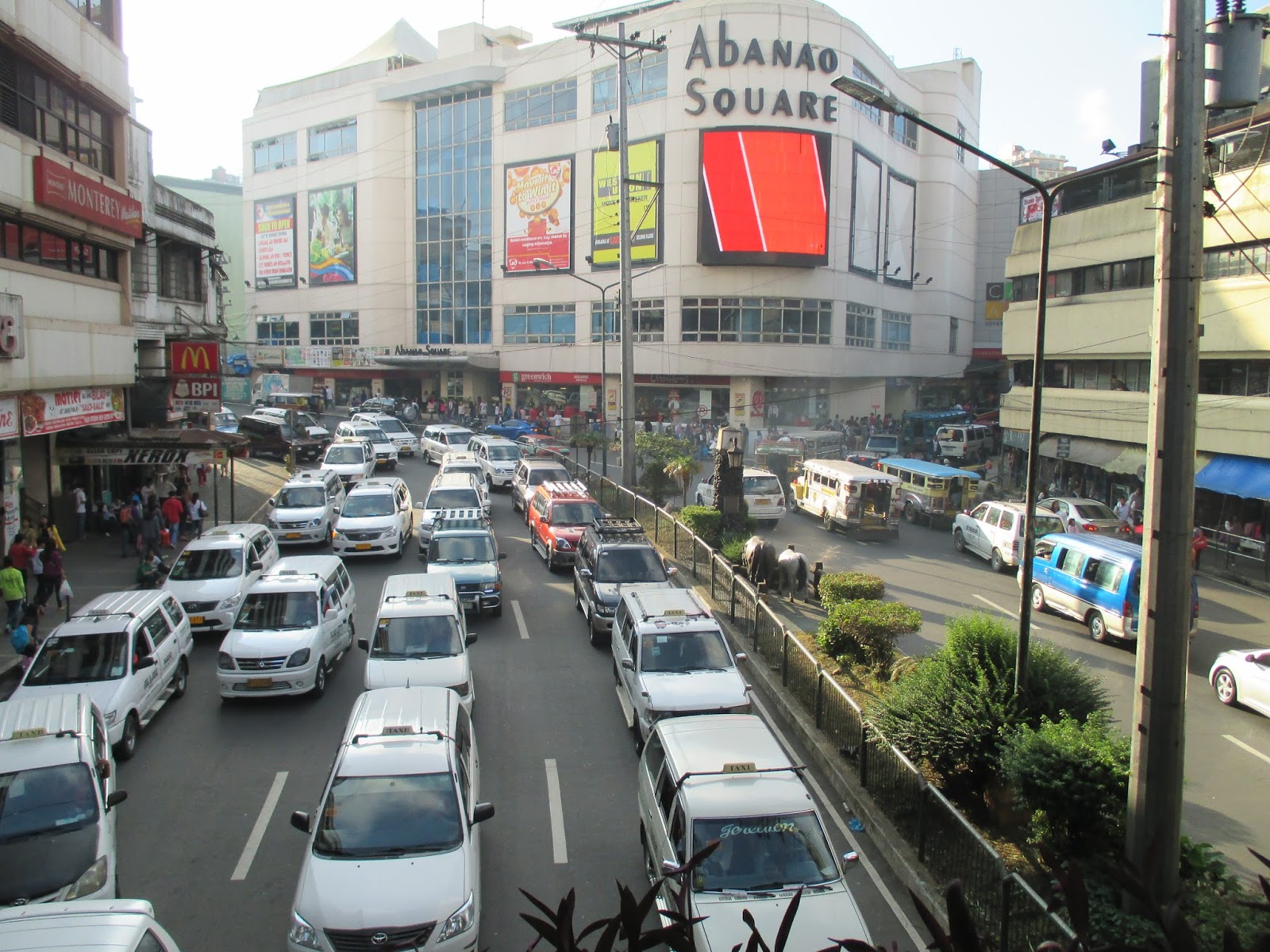
Traffic at Abanao St. near Maharlika Shopping Center and Baguio Public Market

Magsaysay Avenue near Lower Session Road

Man-made lagoon at Burnham Park

Senior highlander begging near Upper Session Road
Ukay-Ukay or Wagwagan


Night market on Harrison Blvd near Burnham Park

Baguio City Public Market

Holiday Park Hotel on Abanao Extension near Burnham Park

Deluxe Twin room at Holiday Park


At the lobby

Making a side trip to Ambuklao

Km 250 marker near Baguio City Hall. Distance of Baguio City from Manila is 250 kms.

Cafe By The Ruins on Shuntug Road near Baguio City Hall

Cafe by the Ruins' version of Bulalo

Route 55 restaurant along Legarda Road

Special soup

Hungarian Sausages at Route 55

Ribs served with salad

Good Taste Restaurant is now the number one restaurant in Baguio City. It is located near Burnham Park.

Good Taste's Fried Chicken with rice, egg and Chopsuey

________________________________

Sunday, 13 December 2015

Traversing Kennon Road On A Friday Morning


Traversing Kennon Road On A Friday Morning

         By 8:30 a.m., we were at Camp One in Saitan, Rosario, La Union. Driving a Toyota Vios, I pulled off to the side of the national road that leads to Baguio City. I was counting the numerous toll fees paid from the entrance at Mindanao Avenue to the ultimate exit point in Urdaneta, Pangasinan: Mindanao Ave Toll Booth - P45; NLEX Dao Exit - P173; SCTEX Exit-P104; Tarlac-Pangasinan Expressway(Urdaneta Exit) -P216; Grand Total - P538. Multiply this by 2 as you will pay the same amount on your way back.

         At exactly 8:45 a.m., when the sun was shining bright and with its rays bouncing off the welcome landmark of Benguet Province, we began our assault of Kennon Road. There were not too many vehicles that Friday morning. One portion of the road, before reaching Twin Peaks, was wet as water was cascading down the wall of the mountain that was too close to the road. Clearly seen were safety barriers and warning signages at every dangerous cliff and bend.

         At Camp 6, it was all too quiet at what used to be mining sites of Black Mountain Inc. and Benguet Exploration as these two companies had ceased operations many years back. Houses of ex-miners have remained close to the road or near the mountain slope. About 500 meters away, vehicles were making a brief stopover at the area near the famed Lion's Head. Visitors were taking souvenir shots.

         Right after the Lion's Head, I shifted to low gear as I was about to negotiate a very steep ascent which was followed by a narrow, sharp curve. Normally, drivers of vehicles on the way down give way to those going up. I was given the same road courtesy. It turned out to be smooth and easy and in 10 minutes we were entering Baguio City. I pulled over again near the viewing deck, looked at the stunning view of the zigzag road, walked down the concrete stairs and made a hand salute in front of the bust of Colonel Lyman Kennon, the man credited for building Kennon Road through persistence and determination.

- Konted

The territory of Benguet Province starts here.
Kennon Road toll booth. Only light vehicles are allowed to use Kennon Road. Cars are charged P15 each. Distance of  Kennon Road from Camp One to Camp Eight is 34 kilometers.

First of several steel bridges on the way up to Baguio City

Water cascading mainly during the rainy season

Road is too close to the rocky portion of the mountain.

Kennon Road follows the course or flow of the enchanted Bued River.

Vehicles bound for the lowlands.

Do not ignore warning signs. It took several years to build Kennon Road. Many lives were lost.

Another steel bridge along Kennon Road

An overloaded jeepney on the way up to the city

Houses built on mountain slopes

The Lion's Head at Camp Six. 
View of Kennon Road from the  top

The bust of Colonel Lyman Kennon dubbed as the builder of what used to be called Benguet Road.

Distance of Baguio City from Manila is 250 kilometers. Km 250 marker is near Baguio City Hall.
_____________________________________