General Yamashita and His Glittering Gold
In a mountain sitio in Norzagaray, Bulacan, treasure hunters, for the past 60 years, have come and gone. Till now, they keep searching for Yamashita's gold and other loot of the fleeing Japanese troops in WWII. One group, organized by a person close to the powers that be, quietly slipped inside the Ipo Dam compound in the stillness of the night and began digging the next morning at the small park overlooking the water reservoir. They were accompanied by a supposed relative of a WWII Japanese soldier. And quietly, too, they left after a week of digging. They found nothing.
 |
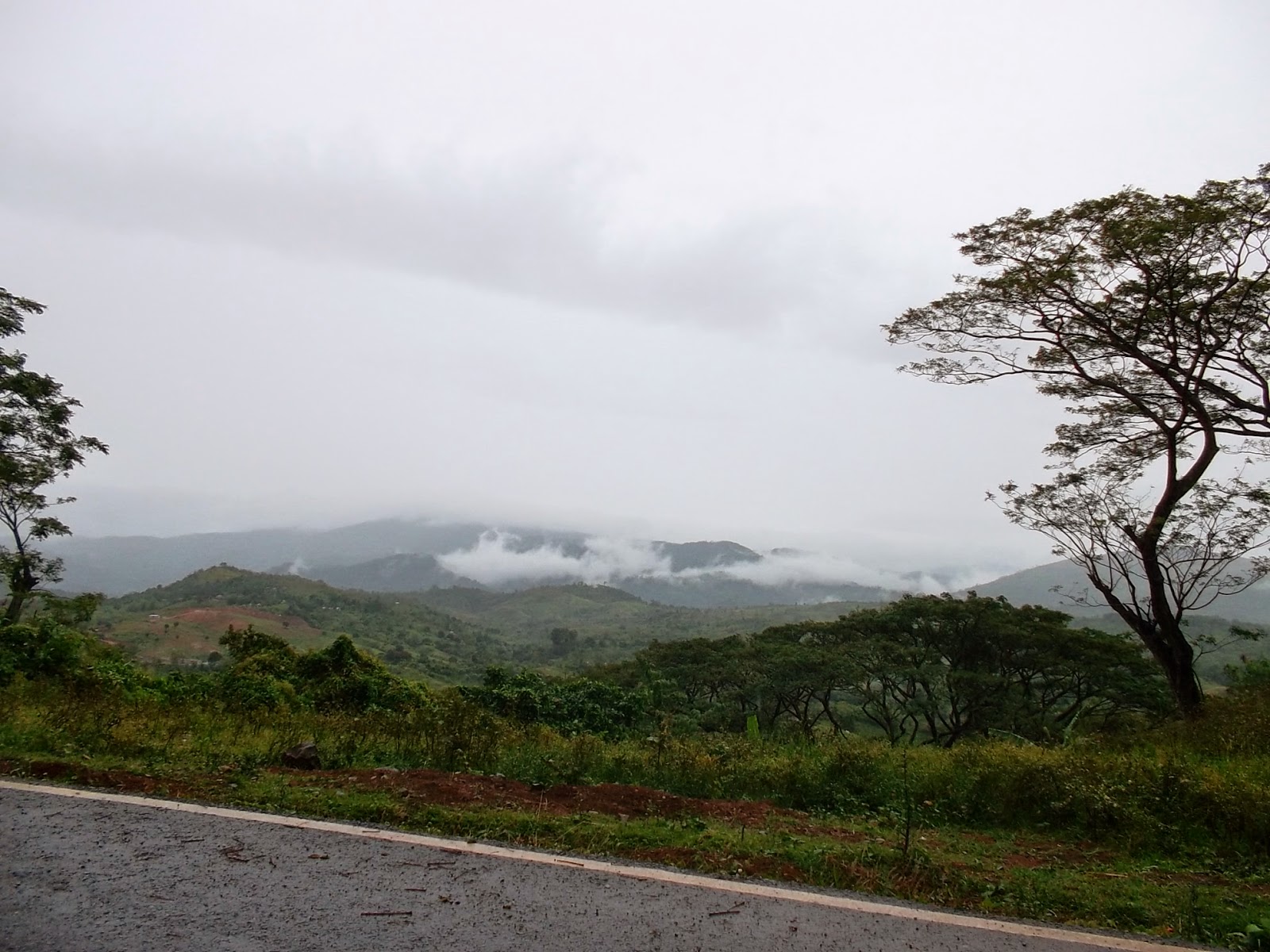
| The Angat Watershed at the Sierra Madre Mountain Range in Norzagaray, Bulacan where Ipo Dam is located. |
 |
| Ipo Dam in Brgy. San Mateo in Norzagaray |
As a backgrounder, fleeing Japanese troops under General Kawashima fortified Ipo Dam in 1945, encamped and took control of the surrounding areas. When the American troops, backed up by Filipino guerillas under Major Marcos Agustin, attacked Ipo Dam, fighting lasted for days. More than 2,000 Japanese soldiers were killed and the American and Philippine Forces regained control of the dam. The water problem of liberated Manila was solved. What ensued after the war was the search for the Yamashita Treasure. Yamashita Treasure took its name from General Toyiuko Yamashita.
 |
| Ipo Dam in 1945. There was intense battle between Phil American Forces and the Japanese Army under General Kawashima for two weeks in May of 1945 for control of the dam. |
 |
| Map used by the American Forces in attacking and penetrating the solid defense of the Japanese Forces. |
 |
| Monument dedicated to all those who died in the Battle for Ipo Dam. It is located along the road leading to the dam. |
Riding high on the crest of his significant victories in South East Asia, General Yamashita was assigned as commander of the Japanese forces in the Philippines in October, 1944. He was called Tiger of Malaya. In an earlier battle in Singapore, he and his men displayed grit and superior combat skills in subduing Britain's General Percival and his 130,000 soldiers. His reputation preceded him. Known as a bright military tactician, his presence alone bouyed the sagging spirit of most Japanese soldiers and caused apprehension to the enemy. With him then were the supposed Yamashita's gold which formed part of their loot.
 |
| General Yamashita's father was a doctor while his wife was a daughter of a general. (wiki pic; caption is mine) |
 |
| General Yamashita, known as The Tiger of Malaya, inspects a Japanese camp in Singapore in 1942. (changiprisonmuseum pic; caption is mine) |
About this time, too, General MacArthur and the Allied Forces had landed in Palo, Leyte and began their seige to recapture Leyte province. MacArthur and his men emerged victorious in the Battle of Leyte that lasted for two months. This was followed by their island hopping military operations in Samar, Mindoro and Lingayen,Pangasinan. While General Yamashita was still unfamiliar with the Philippine Islands, General MacArthur had been in the Philippines since 1930, acting as Commander of US Troops in this US colony. The two were destined to meet and fight it out and MacArthur, though losing Bataan and Corregidor 2 years earlier, enjoyed home court advantage.
 |
| General MacArthur and his men landing at Palo, Leyte on Oct 20, 1944 (www.history.army photo; caption is mine) |
 |
| U.S. Forces attack Japanese troops in Labiranan, Leyte. (wiki pic; caption is mine) |
 |
| US naval forces under General Krueger about to land at the shores of Lingayen, Pangasinan on January 9, 1945 (wiki; caption is mine) |
Aware of the fact that the Allied Forces under MacArthur were fully prepared and determined to regain control of Manila, General Yamashita ordered all Japanese troops to withdraw from the city and take refuge in the mountains in the north and east. But Rear Admiral Iwabuchi, commander of the Japanese Naval Forces in Manila refused to comply. He refused to yield Manila and was insistent to fight till death.
 |
| Rear Admiral Iwabuchi Sanji was determined to fight the Americans. |
 |
| Nuns being rounded up and questioned by Japanese soldiers (hechoayer photo; caption is mine) |
As MacArthur and his men began attacking Manila, several Japanese Army troops were trapped in the city. As the Allied Forces used heavy artillery, these Japanese soldiers retaliated by killing countless prisoners of war, civilians and interns. When the smoke cleared, Manila, as an aftermath of the heavy bombardment by Allied Forces, was totally devastated. Admiral Iwabuchi committed suicide and almost all of his men were wiped out.
 |
| American soldiers in action near Dewey Blvd in February, 1945 (peopleus pic; caption is mine) |
 |
| An American tank rams through the walls of Intramuros where prisoners of war are held. (g'gle pic; caption is mine) |
 |
| Victims of the atrocities of Japanese soldiers who went on a rampage during the Liberation of Manila (battleofmanilapic; caption is mine) |
 |
| Civilians massacred by Japanese soldiers (g'gle pic; caption is mine) |
 |
| Filipinos, after being asked to line up against the wall, are executed by Japanese soldiers in Ermita, Manila in February, 1945. (g'gle pic; caption is mine) |
 |
| Rear Admiral Iwabuchi and his staff committed suicide inside the Agriculture Building during the Battle of Manila in 1945. (presidential museum pic; caption is mine) |
 |
| Japanese soldiers killed while trying to flee and cross the Pasig River (people and places pic; caption is mine) |
 |
| Intramuros after the Liberation of Manila (g'gle pic; caption is mine) |
Fighting shifted to the mountains of Sierra Madre, specifically in the areas of Rizal and Bulacan. After suffering heavy casualties in the Battle for Ipo Dam in Norzagaray, Bulacan, the Japanese moved North. General Yamashita, by this time, had established his headquarters inside Camp John Hay. With American troops doggedly pursuing the retreating Japanese soldiers, Yamashita moved deeper to the Cordillera mountains. With the Allied Forces almost in full control of Luzon island, Yamashita surrendered in the quiet town of Kiangan in Ifugao province on September 2, 1945.
 |
| Assembly of Japanese troops in Bataan (abucayphoto; caption is mine) |
 |
| Backed up by tanks, American Forces doggedly pursue the Japanese Forces in the North. (phildefenseforumpic; caption is mine) |
 |
| Mopping-up operation by American soldiers at Session Road in Baguio City (phildefenseforumpic; caption is mine) |
 |
| The mountains of Kiangan in Ifugao Province (kiangangovpic; caption is mine) |
 |
| General Yamashita and his staff emerge from hiding in the mountains of Kiangan, Ifugao on Sept 2, 1945. (wikimediapic; caption is mine) |
 |
| War Memorial Shrine in Kiangan, Ifugao (kiangangov; caption is mine) |
 |
| Map of Ifugao Province (g'gle pic; caption is mine) |
 |
| General Yamashita and his men at Camp John Hay in Baguio City after surrendering at Kiangan, Ifugao.(g'gle pic; caption is mine) |
 |
| The formal surrender of Japanese Forces in the Philippines held at Camp John Hay. (wiki; caption is mine) |
Still furious with the massacre of innocent civilians and the ensuing looting, MacArthur formed a military commission to investigate Yamashita for war crimes. Yamashita was held captive at the Philippine Detention and Rehabilitation Center during the entire trial. He was given American lawyers to help him. The gist of his defense was that the alleged atrocities were beyond his control as his main directive was to abandon Manila which was ignored by some top Japanese officers. After months of trial, the military commission found Yamashita guilty as charged. He was to die by hanging.
 |
| An MP escorts General Yamashita back to his prison cell. (truman library pic; caption is mine) |
 |
| The Military Trial of General Yamashita (trumanlibrarypic; caption is mine) |
 |
| General Yamashita with his Ämerican lawyers. The main issue against him is "Command Responsibility". (seludongpic; caption is mine) |
 |
| General Yamashita gives his own account at the trial. (yamashitalegacypic; caption is mine) |
 |
| General Yamashita listens as the chairman of the military commission reads the verdict: GUILTY (time magazine pic; caption is mine) |
 |
| General Yamashita minutes after hearing the verdict. He is sentenced to death. (pacificparatrooper pic; caption is mine) |
On the day of his execution, Yamashita issued an emotional statement. He was sorry for the loss of countless lives. He was sorry for the deaths of Kamikaze pilots who, as a result of Japan's inferior military technology, were sacrificed. He was explaining that he did not commit Harakiri as he wanted to take the blame. If he committed suicide, the Emperor would have to take the blame. As the hangman cut the ropes, Yamashita dropped several meters and left hanging and swinging until he was dead. He was 61.
 |
| News of General Yamashita's execution in Los Banos, Laguna (rarenews photo; caption is mine) |
MacArthur summed it up best when he said: This officer, of proven field merit, entrusted with high command involving authority adequate to responsibility, has failed this irrevocable standard, has failed his duty to his troops, to his country, to his enemy, to mankind; has failed utterly his soldier faith. The results are beyond challenge.
.jpg) |
| General MacArthur even warned the Japanese not to commit atrocities against civilians and prisoners before the Siege of Manila began. (wiki pic; caption is mine) |
Several years ago, at Sitio Pinagkamaligan near Ipo Dam, several men belonging to an influential group were asking permission to dig in our place. I could not say no as they had been helpful to me in the past. They had with them a detecting equipment and several drillers. I provided them with a sack of rice for the succeeding days of operations. After working throughout the day that extended to the night, their search yielded several drums of motor oil for airplanes with Japanese inscriptions. That place was once a Japanese camp. They also uncovered a box of bullets and several helmets. And what about the much-coveted Yamashita's gold? Like others before them, they found nothing !
 |
| Site is about 200 meters from this old mango tree. |
 |
| Usual equipment used in treasure hunting (pressofatlantic pic; caption is mine) |
 |
| Is it a myth? (g'gle pic; caption is mine) |
- Konted
____________________________



.jpg)


.jpg)


.jpg)
.jpg)
.jpg)

.jpg)
.png)
.jpg)

.jpg)


.jpg)